

The Energy Order Is Breaking Quietly in 2026
How energy geopolitics, oil markets, and the petrodollar system are reshaping global power in 2026

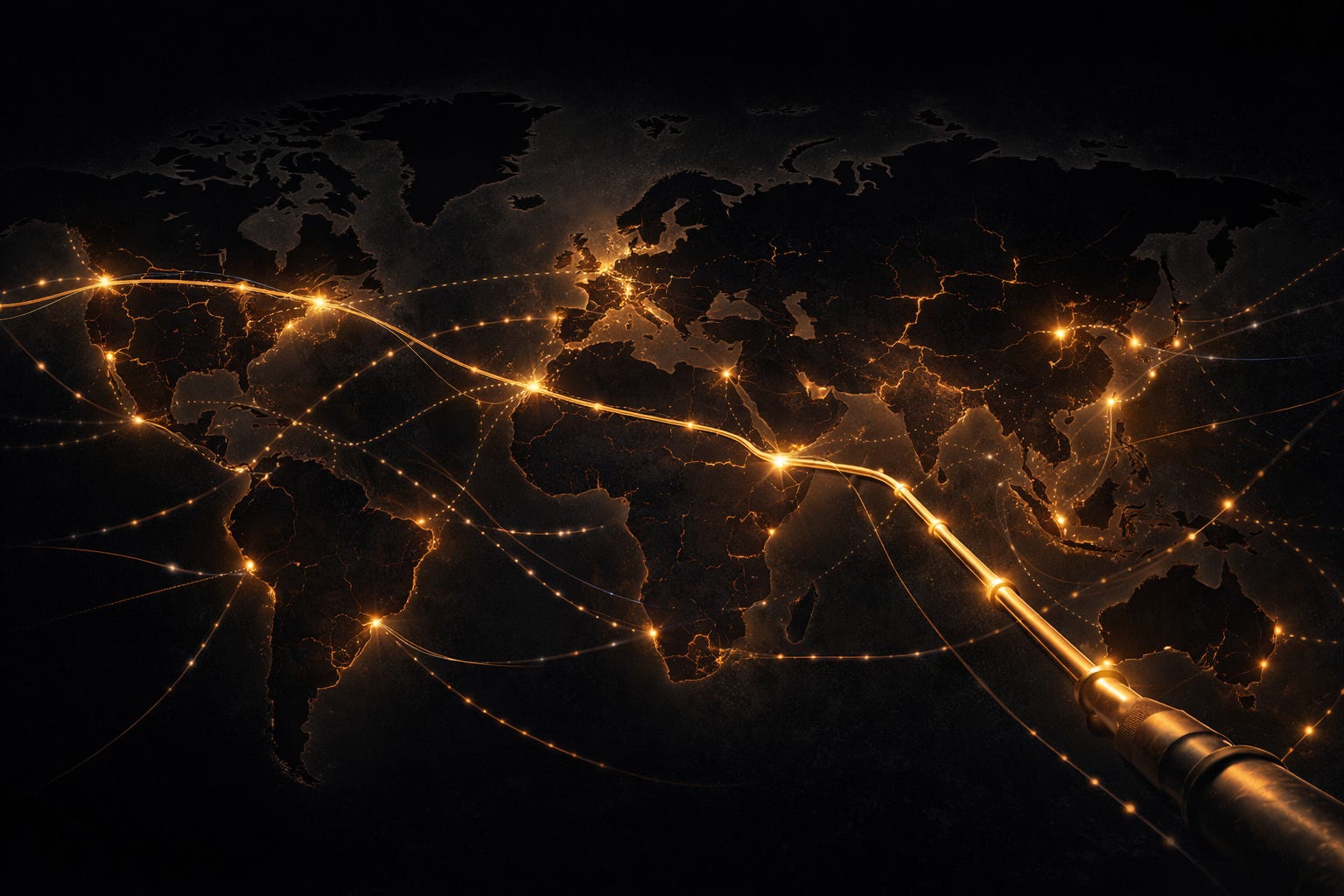
“Control over resources is not about ownership. It is about deciding who has choices.”
△ ▼ △
Dispatches | By Beyond Coordinates
Reader note:
I write Dispatches to track how global systems shift quietly before they become obvious. In this essay I connect signals across energy geopolitics, oil markets, and currency systems that increasingly appear linked.
The Pattern I Started Seeing
For years I believed oil politics had become background noise. Governments still debated energy policy, but the global system felt stable.
What I am seeing now looks less like isolated events and more like a shift in energy geopolitics that is beginning to reshape the global order.
That assumption began to weaken in early 2026.
Today the world consumes more than 100 million barrels of oil per day, and disruptions anywhere along that supply chain ripple across markets quickly.
Several developments began appearing at the same time.
A U.S. operation linked to oil flows from Venezuela.
China expanding crude purchases from Iran.
Internal unrest and internet shutdowns in Iran.
Renewed strategic attention on Greenland and its mineral deposits.
Individually each story seemed manageable. When I placed them side by side they began to reveal a pattern.
One earlier essay helped me frame the broader geopolitical context behind these developments.
Related Reading
If you want to understand how these developments connect to wider geopolitical shifts, you may find this essay helpful:
The Third Pole
How India, China, and the Gulf are reshaping the balance of power between East and West
Energy Security Is Driving Global Strategy Again
Energy has always shaped geopolitics, but dependence today makes the system extremely sensitive.
Global oil demand currently sits around 102 million barrels per day, according to international energy agencies.
Several structural realities stand out.
China is the largest crude oil importer in the world
The United States and Russia remain among the largest producers
Roughly 20 percent of global oil shipments pass through the Strait of Hormuz
This means political instability in only a few regions can move global markets.
From where I sit, the tension today is not about scarcity.
It is about who controls energy routes, pricing systems, and financial settlement networks.
Pressure on the Petrodollar System in Global Oil Markets
For decades oil has largely been priced in U.S. dollars. This created the system commonly called the petrodollar order. The petrodollar system remains central to global oil markets, but its dominance is increasingly being tested.
Countries needed dollars to purchase energy, which reinforced demand for the U.S. currency and strengthened American financial influence.
I now see small but meaningful pressures building against that structure.
China has expanded oil settlements in yuan, especially in trade with Iran. Iranian exports are estimated at around 1.3 to 1.6 million barrels per day, with China absorbing a large share of those shipments.
Even modest changes matter because global crude trade is worth more than two trillion dollars annually.
Energy markets and currency systems are deeply connected.
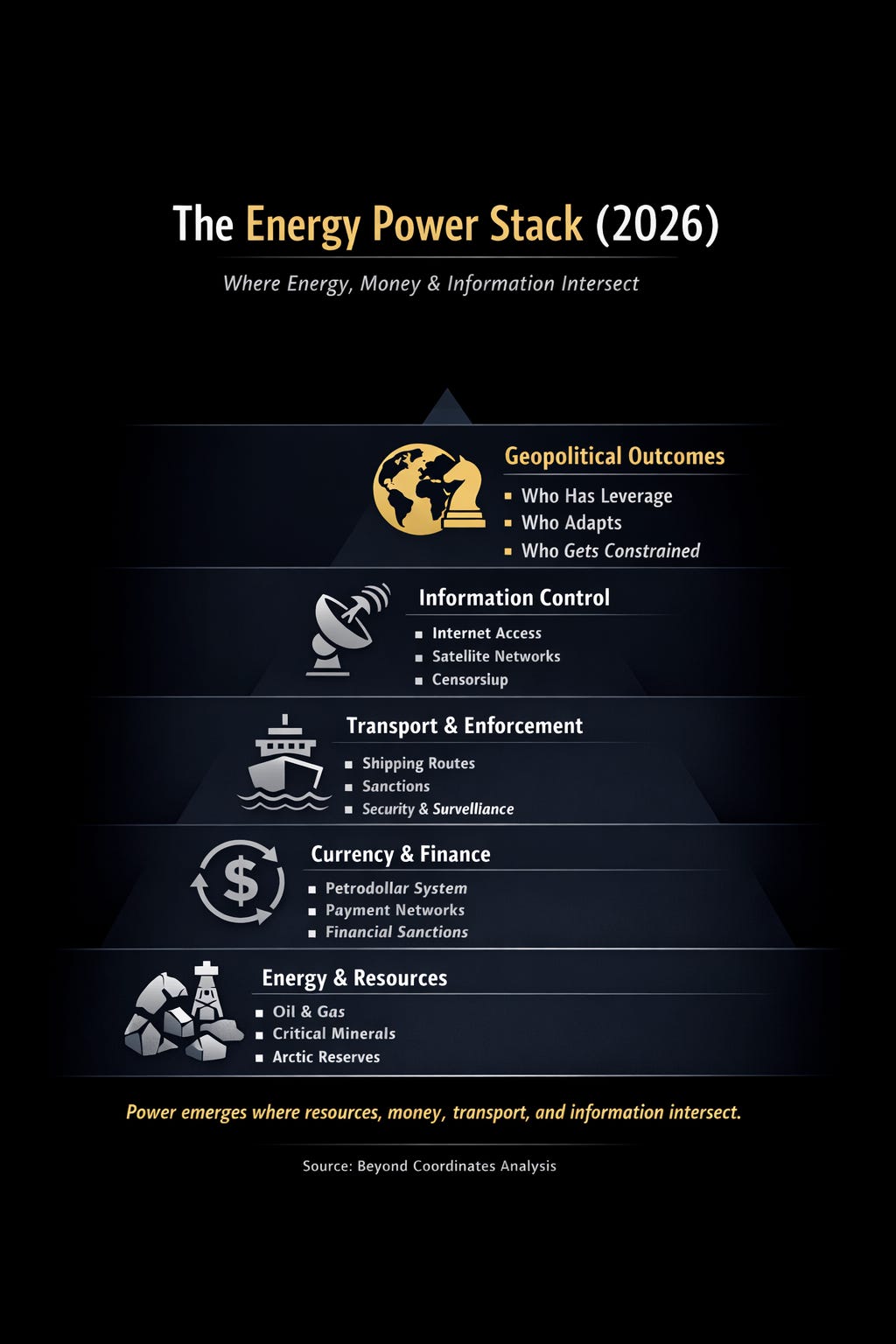
For readers who would like a visual breakdown of the same framework, you can write to me at hello@beyondcoordinates.com and I will share the supporting video and material.
Venezuela, China and Resource Control
Venezuela illustrates another dimension of the same shift.
The country holds the largest proven oil reserves in the world at roughly 303 billion barrels.
Over the past two decades China invested heavily in Venezuelan infrastructure, loans, and oil backed agreements tied to future shipments.
Those investments created long term access to supply.
Recent enforcement actions by the United States targeting Venezuelan tankers appear aimed at disrupting those flows and limiting China’s influence in the Western Hemisphere.
When I examine the situation now, I see more than sanctions.
I see a contest over who controls future energy networks.
Gold, Silver, and Commodity Markets
Energy tensions also spill into financial markets.
Venezuela holds significant precious metal reserves, and gold has historically ranked among its most valuable exports.
During periods of heightened geopolitical tension involving Venezuela, gold and silver futures traded on the Chicago Mercantile Exchange have surged, reflecting investor demand for safe assets.
Commodity markets often act as early indicators of geopolitical risk.
Oil flows, mineral reserves, and financial markets increasingly move together.
Middle East Tensions and Supply Risks
The Middle East remains the most sensitive region for oil supply stability.
Around one fifth of global oil shipments travel through the Strait of Hormuz every day.
Recent tensions involving Iran, Israel, and regional actors highlight how fragile that corridor remains. Israel has issued warnings about emerging security threats in the region, and diplomatic friction involving countries such as Turkey has increased uncertainty.
Any disruption in this corridor quickly moves global prices.
China has also deepened its energy relationship with Iran. In 2025 China purchased roughly 1.38 million barrels per day of Iranian crude, accounting for more than 80 percent of Iran’s oil exports and about 13 percent of China’s total seaborne crude imports.
Much of this oil trade is structured through discounted contracts and settlement mechanisms that often bypass the traditional dollar system. These arrangements allow China to secure cheap energy while giving Iran an economic lifeline despite U.S. sanctions.
Domestic Politics and Energy Prices
Domestic politics also shape energy decisions.
Fuel prices strongly influence voter sentiment in many countries, particularly in the United States, India and China. With midterm elections approaching, controlling inflation and gasoline prices becomes politically important.
That context helps explain tactical decisions such as the temporary waiver allowing Indian refiners to process certain Russian oil shipments already in transit.
India imports around 85 percent of its crude oil, and its refineries supply fuel to several global markets. Allowing those shipments helped prevent oil prices from rising far beyond the current range near 100 dollars per barrel.
The Emerging Energy Order
When I step back and look at these developments together, a new structure begins to appear.
China building alternative oil payment systems.
Sanctioned producers creating shadow supply routes.
The United States defending the dollar based energy architecture.
Major importers like India acting as stabilizing intermediaries.
This is no longer simply an oil market.
It is a system where energy supply, financial networks, and geopolitical influence intersect.
Are We Entering a Larger Global Conflict Phase
This leads me to a question I cannot easily dismiss.
Are we witnessing the early stage of a broader global confrontation, or simply a turbulent transition between energy systems?
Some observers have begun to use the phrase World War 3 when describing growing geopolitical blocs.
I remain cautious about that conclusion.
But the ingredients of larger conflict are visible.
-Energy competition.
-Currency rivalry.
-Regional instability.
-Domestic political pressure in major powers.
With U.S. elections approaching and global energy markets under strain, leaders will face strong incentives to stabilize both prices and political conditions.
For now the world may simply be sitting on a pressure point.
The real challenge will be whether governments can manage this transition before that pressure turns into open confrontation.
Author note:
This Dispatch reflects independent human analysis and interpretation of ongoing geopolitical developments and has been reviewed using GLTR and Radar for authorship signals.
If this perspective resonates, I am always open to thoughtful conversations — hello@beyondcoordinates.com
Selected References
International Energy Agency (IEA) – Global Oil Market Reports
U.S. Energy Information Administration (EIA) – World Oil Reserves Data
OPEC Statistical Review of World Energy
Chicago Mercantile Exchange – Commodity Futures Data
International Monetary Fund – Global Currency Settlement Trends
Copyright © 2026 Beyond Coordinates. All rights reserved.